
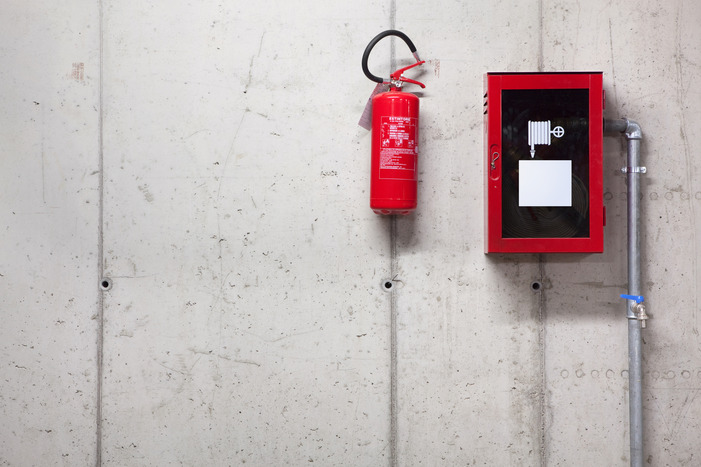

Fire Marshal Fines in California
Contents
- 1 Fire Marshal Fines in California
- 1.1 How Much Do Fire Marshal Fines Cost in California?
- 1.2 California State Fire Marshal Administrative Penalty Structure
- 1.3 Local Jurisdiction Variations: LA County to Orange County
- 1.4 Hidden Costs Beyond the Fine: True Financial Impact
- 1.5 Cost Mitigation Strategies: Reducing Penalty Exposure
- 1.6 Penalty Appeal Processes and Settlement Negotiations
- 1.7 Insurance Considerations and Risk Transfer
- 1.8 Frequently Asked Questions
- 1.8.0.1 Can Fire Marshal fines be deducted as business expenses?
- 1.8.0.2 Do penalties affect property sale transactions?
- 1.8.0.3 Are penalties different for franchises versus independent businesses?
- 1.8.0.4 How do California penalties compare to other states?
- 1.8.0.5 Can bankruptcy discharge Fire Marshal penalties?
- 1.9 Compliance Budgeting Recommendations
- 1.10 Methodology
How Much Do Fire Marshal Fines Cost in California?
Financial Impact Analysis for Business Owners and Property Managers
California business owners facing Fire Marshal violations often experience sticker shock when they receive penalty notices. A single restaurant hood suppression failure can generate $5,000 in fines. A warehouse with blocked fire department access doors might face $10,000 in penalties. A high-rise office building with nonfunctional smoke control systems could see fines exceeding $25,000.
Understanding these costs is not merely academic; it is essential for budgeting compliance investments, evaluating fire watch service costs against penalty risks, and making informed decisions about property management priorities.
This article provides comprehensive financial analysis of California Fire Marshal fines, including state administrative penalties, local jurisdiction variations, and hidden costs that multiply the financial impact beyond the citation amount. We examine fine structures for different violation types, escalation patterns for repeat offenders, and the total cost of noncompliance including business interruption, legal fees, and insurance impacts.
While focused on California, we include New York comparisons for businesses operating across both states. This is YMYL (Your Money Your Life) content; financial decisions regarding compliance investments affect business viability and should be based on accurate, current data.
The financial stakes extend beyond immediate penalties. Fire Marshal fines in California fund continued enforcement activities, creating self-sustaining regulatory systems that show no signs of leniency. Los Angeles County collected over $12 million in fire code penalties in 2023 alone.
Orange County Fire Authority issued penalties averaging $4,200 per violation. Understanding this enforcement economy helps businesses recognize that compliance investment is not optional charity but necessary cost of operation in heavily regulated markets.
California State Fire Marshal Administrative Penalty Structure
California operates under the Office of the State Fire Marshal (OSFM) Administrative Civil Penalty Program, which establishes baseline fine amounts that local jurisdictions adopt or exceed.
The program categorizes violations by severity and risk level, with penalties reflecting the potential for injury, property damage, and life safety impact. Understanding these categories helps businesses anticipate penalty exposure and prioritize compliance investments accordingly.
Minor violations carry penalties ranging from $100 to $500 per occurrence. These include paperwork deficiencies, missing posted certificates, minor egress obstructions that do not fully block exits, and recordkeeping failures. While individually modest, multiple minor violations can accumulate rapidly during comprehensive inspections. A Los Angeles restaurant cited for six minor violations during a single inspection faced $2,400 in base penalties before local surcharges.
Moderate violations generate fines between $500 and $2,500. This category covers operational deficiencies including expired fire extinguisher inspections, nonfunctional emergency lighting, blocked electrical panel access, and storage violations that do not create immediate life safety hazards. These violations represent the bulk of citations issued during routine inspections. Orange County data shows 68% of violations fall into this moderate category, with average penalties of $1,200.
Serious violations trigger penalties from $2,500 to $10,000 per occurrence. These include impaired fire protection systems, blocked exit doors, nonfunctional fire alarms in occupied buildings, and high-piled storage without proper sprinkler protection. Serious violations create immediate life safety risks and often trigger fire watch requirements alongside financial penalties. A San Diego hotel faced $8,500 in serious violation penalties when smoke detectors in guest corridors were found nonfunctional during a complaint inspection.
Willful violations multiply base penalties by factors of 2 to 5 depending on circumstances. Willful designation applies when businesses knowingly violate codes, ignore previous correction notices, or deliberately disable safety systems. A Bay Area warehouse that propped open fire doors despite previous citations faced $15,000 in willful violation penalties on top of $3,000 in base fines. Willful violations also trigger mandatory compliance timelines; failure to correct within specified periods generates additional daily penalties.
Repeat offender escalation increases penalties for businesses cited multiple times within 12-month periods. Second violations of the same code section carry 3x multipliers; third violations carry 5x multipliers. A Long Beach restaurant cited for grease accumulation three times within eight months saw penalties escalate from $800 to $2,400 to $4,000 for the same violation type. These escalating penalties create powerful incentives for permanent correction rather than temporary fixes.
Penalty Multiplier Examples: Restaurant Chain Case Study
First violation (minor): Missing posted hood cleaning certificate, $350 base penalty
Second violation (moderate, repeat): Grease accumulation 6 months later, $1,200 base x 3 = $3,600
Third violation (serious, willful): Hood suppression disabled for cleaning, never reactivated, $5,000 base x 5 = $25,000
Total penalties over 10 months: $28,950 plus $18,000 in fire watch costs during repairs
Paperwork, postings
Equipment, access
System failures
Knowing violations
Local Jurisdiction Variations: LA County to Orange County
While California establishes baseline penalty structures, local fire authorities modify amounts based on regional enforcement priorities, cost of living adjustments, and local ordinance variations.
Businesses operating across multiple jurisdictions must understand these differences to maintain consistent compliance budgets. Los Angeles County, Orange County, and San Diego County represent three distinct enforcement environments with significantly different penalty exposure.
Los Angeles County Fire Department maintains some of California’s highest penalty schedules. The department’s 2024 penalty schedule shows base amounts 15% above state minimums, with additional surcharges for inspections conducted outside normal business hours or requiring re-inspection. LA County also aggressively pursues willful violations, with multipliers often reaching 4x rather than the standard 2x. A downtown Los Angeles commercial building faced $32,000 in penalties for fire alarm system deficiencies that would have generated $18,000 in Orange County.
Orange County Fire Authority operates with penalty schedules closer to state baselines but emphasizes rapid compliance over maximum fines. First-time offenders often receive correction notices without penalties if violations are corrected within 72 hours. However, Orange County strictly enforces repeat offender escalation; businesses that fail to maintain corrections face penalties at the maximum multipliers. This creates a compliance environment favoring prompt correction over penalty negotiation.
San Diego County combines state baseline penalties with aggressive daily penalties for uncorrected violations. Each day of noncompliance after citation generates additional fines equal to 10% of the base penalty. A $5,000 serious violation becomes $5,500 on day two, $6,000 on day three, and continues accumulating until correction is verified. This daily accumulation creates urgent financial pressure for rapid remediation.
Northern California variations include Bay Area jurisdictions with penalty schedules reflecting higher operational costs. San Francisco Fire Department penalties run 20% above state baselines, while Oakland and San Jose maintain schedules closer to state minimums but with strict enforcement of high-rise specific violations. Sacramento County operates near state baselines but emphasizes agricultural and warehouse occupancy enforcement due to regional economic focus.
New York comparison reveals different penalty philosophies. New York City Fire Department penalties typically exceed California amounts for equivalent violations, with serious violations starting at $5,000 and reaching $25,000. However, New York offers more extensive penalty mitigation programs for first-time offenders who implement comprehensive compliance systems. Upstate New York jurisdictions often mirror California penalty levels but with less aggressive escalation for repeat violations.
Hidden Costs Beyond the Fine: True Financial Impact
Fire Marshal fines represent only the visible portion of noncompliance costs. The true financial impact includes hidden expenses that often exceed penalty amounts by factors of three to ten.
Understanding these hidden costs is essential for evaluating compliance investment returns and making informed decisions about fire watch service procurement versus risk acceptance.
Business closure revenue loss constitutes the largest hidden cost category. When Fire Marshals red-tag buildings or order immediate evacuation, revenue stops while expenses continue. A Los Angeles restaurant generating $8,000 daily revenue faced $24,000 in lost sales during a three-day closure for hood suppression repairs. A 200-room hotel with $150 average daily rates loses $30,000 per day when fire alarm failures require guest evacuation. These revenue losses are uninsured; business interruption policies typically exclude regulatory closure.
Fire watch service costs during compliance periods add substantial expense. California requires continuous fire watch during system impairments; watch duration depends on repair complexity. Typical costs range from $35-$75 per hour depending on jurisdiction and risk level. A warehouse requiring 24/7 fire watch for 14 days during sprinkler system repairs faces $16,800 in watch costs at $50 hourly rates. High-risk occupancies or those with previous violations may require dual guards, doubling costs.
Legal defense fees escalate quickly when businesses contest penalties or negotiate settlements. Administrative hearings require legal representation; attorney fees for fire code defense typically range from $300-$500 hourly. Even successful penalty reductions often consume $5,000-$15,000 in legal fees. Complex cases involving multiple violations or willful designations can generate $50,000+ in defense costs.
Insurance premium impacts extend for years after violations. Property insurers review Fire Marshal citation histories during renewal underwriting; serious violations trigger premium increases of 10% to 25% for three to five years. A $20,000 annual premium becomes $25,000 after serious violations, creating $15,000 in additional costs over three years. Some insurers non-renew policies after willful violations, forcing expensive placement with surplus lines carriers.
Re-inspection fees and compliance verification costs accumulate during correction periods. Los Angeles County charges $250 per re-inspection; Orange County charges $175. Multiple re-inspections are common when corrections require multiple attempts or when violations are widespread. A commercial building with violations across ten tenant spaces might require five re-inspections, generating $1,250 in additional fees.
Employee downtime and productivity loss occur during emergency repairs and inspections. Staff must coordinate with contractors, escort Fire Marshals, and manage disrupted operations. A 50-employee office building losing four hours of productivity per employee during fire alarm repairs faces $4,000 in loaded labor costs at $20 hourly rates. These costs are rarely tracked but significantly impact operational budgets.
True Cost Case Study: Hotel Fire Alarm Failure
Visible penalty: $8,500 serious violation fine
Hidden costs:
• Revenue loss (2-day partial closure): $45,000
• Fire watch (72 hours): $10,800
• Emergency repairs (premium rates): $18,000
• Legal consultation: $3,500
• Insurance premium increase (3 years): $12,000
• Re-inspection fees: $525
• Staff overtime for coordination: $2,400
Total true cost: $100,725
Prevention investment equivalent: Annual maintenance contract at $8,500/year would have prevented failure
Immediate Costs
- Base penalty
- Willful multipliers
- Daily penalties
- Re-inspection fees
- Emergency repair premiums
Long-Term Costs
- Insurance premium increases
- Fire watch during repairs
- Legal defense fees
- Revenue loss from closure
- Reputation damage
Cost Mitigation Strategies: Reducing Penalty Exposure
Proactive compliance investment consistently costs less than penalty payment and remediation. California businesses that implement systematic fire safety programs reduce violation rates by 80% and penalty exposure by over 90%.
Understanding cost-effective mitigation strategies allows businesses to allocate limited budgets where they generate maximum protection against enforcement actions.
Annual maintenance contracts represent the most cost-effective penalty mitigation strategy. Comprehensive fire protection system maintenance, including alarm testing, extinguisher inspection, and suppression system service, typically costs $3,000-$8,000 annually for small to medium commercial properties. This investment prevents the system failures that generate serious violations and emergency fire watch requirements. A Los Angeles retail center paid $5,200 annually for maintenance; neighboring properties without contracts averaged $18,000 in annual penalties and emergency repairs.
Self-inspection programs identify violations before Fire Marshals arrive. Monthly internal inspections using Fire Marshal checklists catch blocked exits, expired extinguishers, and storage violations while they remain minor issues. Assigning maintenance staff specific fire safety responsibilities creates accountability. Properties with documented self-inspection programs often receive warning notices rather than penalties for first-time violations; the documentation demonstrates good faith compliance efforts.
Staff training investments prevent operational violations. Employees who understand fire door importance do not wedge them open. Kitchen staff trained on hood cleaning requirements maintain compliance. Security guards trained on egress paths do not allow storage in exit corridors. Training costs $200-$500 per employee but prevents willful violations that carry maximum multipliers. California requires fire safety training for certain occupancy types; exceeding minimums reduces violation risk.
Pre-inspection consultations with fire protection contractors identify deficiencies before official inspections. Many contractors offer compliance audits for $1,500-$3,000 that reveal violations invisible to untrained eyes. Correcting these issues before Fire Marshal arrival prevents citations entirely. This strategy is particularly valuable before annual inspections or when purchasing new properties with unknown compliance status.
Fire watch service relationships reduce emergency response costs. Establishing contracts with fire watch providers before emergencies eliminates premium pricing for immediate deployment. Contract rates typically run 20% below emergency rates. Having established relationships also ensures faster response when violations require immediate watch, reducing closure duration and revenue loss.
With systematic programs
Annual contract cost
Without maintenance
On compliance investment
Mitigation Investment ROI Analysis
Annual compliance investment: $8,500 (maintenance, training, inspections)
Avoided penalty risk: $35,000 (average cost of serious violation with hidden costs)
Risk reduction: 85% (industry average for systematic programs)
Expected value: $29,750 in avoided costs annually
Net ROI: 250% return on compliance investment
Break-even: Single avoided serious violation covers 4+ years of prevention
Penalty Appeal Processes and Settlement Negotiations
California businesses have the right to contest Fire Marshal penalties through administrative hearings and settlement negotiations.
Understanding these processes helps businesses evaluate whether to pay, appeal, or negotiate. While appeals require time and legal investment, successful challenges can reduce penalties significantly or eliminate them entirely.
Administrative hearing procedures vary by jurisdiction but follow similar patterns. Businesses receive citation notices with penalty amounts and appeal instructions. Appeals must be filed within 10-30 days depending on the issuing authority; missing deadlines forfeits appeal rights. Hearings are conducted before administrative law judges or hearing officers, not in criminal court. Businesses may represent themselves or hire attorneys; complex cases warrant legal representation.
Valid appeal grounds include factual disputes about violations, procedural errors in inspection or citation issuance, and penalty calculation errors. Successful appeals often demonstrate that violations were corrected before citation issuance, that inspection procedures were improper, or that penalty multipliers were incorrectly applied. Photographic evidence of compliance, maintenance records, and witness testimony support appeal claims.
Settlement negotiations offer alternatives to full hearings. Fire authorities often accept reduced penalties for immediate payment and documented compliance improvements. Typical settlements reduce penalties by 30% to 50% while avoiding hearing costs. Los Angeles County settles 60% of appealed cases; Orange County settles 75%. Settlement advantages include faster resolution, reduced legal fees, and predictable outcomes.
Good faith compliance defenses can eliminate willful violation designations. Demonstrating that violations resulted from equipment failure despite maintenance programs, or that employees acted contrary to training, can reduce multipliers. Documentation is critical; businesses must prove compliance systems were in place and violations were unintentional. A San Diego restaurant successfully contested willful designation by showing hood cleaning contracts and employee training records.
Financial hardship considerations influence settlement terms. Small businesses with limited resources may qualify for extended payment plans or penalty reductions based on inability to pay. These requests require financial documentation and compliance commitments. While not eliminating penalties, hardship considerations make payment manageable without business closure.
Insurance Considerations and Risk Transfer
Property insurance interacts with Fire Marshal penalties in complex ways. While standard policies exclude regulatory fines, insurance coverage affects overall financial impact of violations. Understanding these relationships helps businesses optimize insurance programs and evaluate whether specialized coverage options provide value.
Standard property insurance exclusions explicitly eliminate coverage for fines, penalties, and regulatory compliance costs. Policies cover physical damage from fire, not prevention costs or enforcement penalties. Businesses cannot rely on insurance to pay Fire Marshal fines; penalties remain out-of-pocket expenses. This exclusion applies to all standard commercial property forms in California and New York.
Business interruption coverage excludes regulatory closure. When Fire Marshals order evacuation or closure for code violations, standard business interruption policies do not respond. Coverage requires physical damage triggering closure; regulatory action alone is insufficient. Some specialized policies offer limited regulatory closure coverage, but these are rare and expensive. Businesses must self-insure revenue loss from fire code violations.
Legal defense coverage varies by policy. Some general liability policies cover defense costs for regulatory proceedings related to bodily injury or property damage potential. Fire code violations creating life safety risks may trigger this coverage. However, most insurers dispute coverage for pure compliance violations without damage allegations. Businesses should review policies with brokers to understand defense coverage scope.
Insurance premium impacts extend three to five years after violations. Underwriters review Fire Marshal citation histories during renewal; serious violations trigger automatic premium increases or non-renewal. A single serious violation typically increases premiums 15% for three years. Willful violations or repeat citations may result in non-renewal, forcing placement with surplus lines carriers at 50% to 100% premium increases. These long-term costs exceed immediate penalties.
Risk transfer through tenant leases allocates compliance responsibility in multi-tenant properties. Well-drafted leases require tenants to maintain fire code compliance within their spaces and indemnify landlords for tenant-caused violations. However, landlords remain responsible for common areas and building systems. Lease provisions cannot transfer liability for structural or system violations to tenants. Regular tenant inspections ensure lease compliance.
Standard policies exclude
Per serious violation
On insurance costs
After willful violations
Frequently Asked Questions
Can Fire Marshal fines be deducted as business expenses?
No. IRS regulations explicitly prohibit deducting fines and penalties paid to government agencies for violation of law. This includes Fire Marshal penalties. However, costs incurred to correct violations, such as repair expenses and fire watch services, are deductible ordinary business expenses. Consult tax professionals regarding specific situations.
Do penalties affect property sale transactions?
Yes. Outstanding Fire Marshal violations create title issues and must be disclosed during sales. Buyers typically require clearance letters before closing; unresolved violations delay or prevent transactions. Serious violations may trigger lender requirements for compliance escrows. Address violations before listing properties to avoid transaction complications.
Are penalties different for franchises versus independent businesses?
No. Fire codes apply uniformly regardless of business structure. However, franchise systems often have corporate compliance programs that reduce violation rates. Independent businesses without corporate support face higher violation risks. Multi-location businesses may negotiate corporate compliance agreements with Fire Marshals to standardize requirements across properties.
How do California penalties compare to other states?
California penalties are moderate to high compared nationally. Texas and Florida typically impose lower penalties; New York and Illinois often impose higher amounts. California’s systematic escalation for repeat offenders creates higher long-term costs than states with flat penalty structures. The state’s emphasis on willful violation multipliers also increases exposure for intentional noncompliance.
Can bankruptcy discharge Fire Marshal penalties?
Generally no. Government fines and penalties are typically non-dischargeable in bankruptcy proceedings. Additionally, Fire Marshal liens for unpaid penalties may survive bankruptcy and attach to property. Businesses facing financial distress should negotiate payment plans with fire authorities rather than expecting bankruptcy relief from penalties.
Compliance Budgeting Recommendations
Effective compliance budgeting treats fire safety as predictable operational cost rather than emergency expense.
Businesses should allocate annual budgets for maintenance, training, and inspection preparation based on property size, occupancy type, and jurisdiction enforcement history. This proactive approach prevents the budget disruption of unexpected penalties and emergency repairs.
Recommended annual allocations: Small commercial properties (under 10,000 square feet) should budget $5,000-$8,000 for fire safety compliance including maintenance contracts, training, and inspection preparation. Medium properties (10,000-50,000 square feet) require $8,000-$15,000. Large properties or high-risk occupancies (hotels, restaurants, warehouses) should budget $15,000-$30,000 annually. These amounts represent 0.1% to 0.3% of property value; penalties and emergency repairs typically cost 1% to 3% when violations occur.
Emergency reserves should cover 30 days of fire watch costs plus estimated minor violation penalties. A typical reserve equals $10,000-$20,000 depending on property size. These reserves prevent cash flow disruption when violations require immediate response. Lines of credit provide alternatives for businesses preferring not to maintain cash reserves.
Cost-benefit analysis should guide compliance investments. Prioritize corrections addressing serious violation risks over minor paperwork improvements. Focus resources on systems with highest penalty exposure: fire alarms, sprinklers, and egress paths. Document all compliance investments to support good faith defenses if violations occur despite efforts.
Protect Your Business from Catastrophic Penalties
Fire Marshal fines in California can exceed $100,000 when hidden costs are included. Proactive compliance investment costs a fraction of penalty exposure. Our certified fire watch guards help businesses maintain operations during system repairs, preventing revenue loss while achieving compliance.
Get Emergency Fire Watch Quote
California and New York | 24/7 Emergency Dispatch | All Occupancy Types
Methodology
This analysis draws from California Office of State Fire Marshal Administrative Civil Penalty Program guidelines, Los Angeles County Fire Department penalty schedules, Orange County Fire Authority fee structures, and San Diego County Fire Marshal enforcement data.
New York penalties referenced from NYC Fire Department penalty schedules. Case studies represent composite scenarios based on actual enforcement actions; specific business names withheld for confidentiality. Financial data current as of January 2026. Penalty schedules change periodically; verify current amounts with local fire authorities.
About the Author
Michael Stevens, CPA, CFE
Certified Public Accountant and Certified Fraud Examiner specializing in regulatory penalty mitigation and compliance cost analysis. Former financial consultant for California fire protection contractors with 18 years experience analyzing fire code enforcement economics. Expert in compliance ROI modeling and penalty appeal financial strategies.
Fire code requirements and penalty schedules vary by jurisdiction and change periodically. Always verify current regulations with your local Authority Having Jurisdiction (AHJ). This guide provides general information for financial planning purposes and does not constitute legal, accounting, or professional advice. For specific compliance questions, consult your local Fire Marshal’s office, qualified fire protection engineer, or licensed attorney. Sources: California Office of State Fire Marshal; Los Angeles County Fire Department; Orange County Fire Authority; San Diego County Fire Marshal; New York City Fire Department; NFPA 1 Fire Code; California Health and Safety Code.